
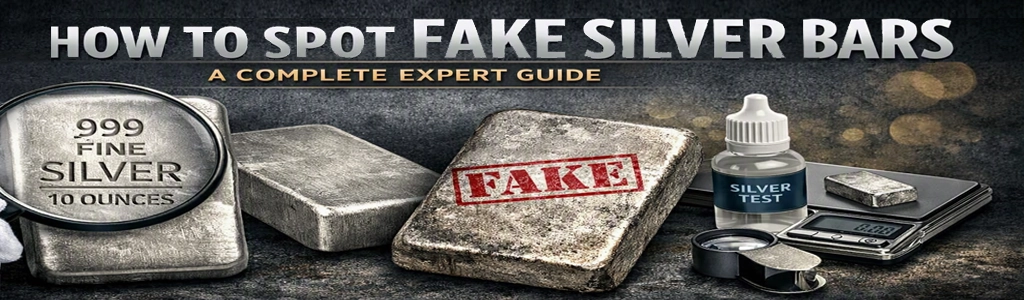
Counterfeit silver bars are becoming more sophisticated every year, making it essential for investors, collectors, and resellers to understand how to authenticate physical bullion. While reputable mints maintain strict quality controls, fake bars still circulate through private sales, online marketplaces, and pawn shops. This guide breaks down the most reliable ways to identify fake silver bars — from simple at‑home tests to advanced professional methods.
Why Fake Silver Bars Are Increasing
The rise in silver prices has made bullion more attractive to counterfeiters. Modern fakes often use:
- Copper or nickel cores plated with silver
- Tungsten inserts (similar density to silver)
- Fake assay cards and holograms
- Laser‑etched serial numbers mimicking real mints
Because of this, relying on just one test isn’t enough — you need a combination of visual, physical, and technical checks.
1. Visual Inspection: The First Line of Defense
Incorrect or Sloppy Stamping
Authentic bars have crisp, deep, perfectly aligned stamping. Red flags include:
- Shallow or uneven impressions
- Wrong fonts
- Misaligned serial numbers
- Misspellings like “FINE SIVLER”
Surface Texture Problems
Real silver has a soft metallic sheen — not mirror chrome. Watch for:
- Overly shiny plating
- Grainy or dull surfaces
- Plating bubbles
- Discoloration or peeling
Suspicious Packaging
Counterfeiters often fake assay cards and plastic seals. Warning signs:
- Blurry printing
- Incorrect holograms
- Wrong mint logos
- Packaging that looks “too new”
2. Physical Tests You Can Do at Home
Weight Check
Silver bars must match their stated weight extremely closely.
- 1 oz bar: ~31.1 g
- 10 oz bar: ~311 g
Deviation over ±0.5 g on small bars is suspicious.
Dimension Check
Counterfeiters often adjust thickness to compensate for lighter metals. Compare your bar’s dimensions to official mint specs.
Magnet Slide Test
Silver is diamagnetic — it repels magnets slightly. A neodymium magnet should slide slowly down a tilted silver bar. If it drops fast or sticks, it’s likely fake.
Ping Test
Tap the bar gently with another metal object.
- Real silver: long, clear, bell‑like ring
- Fake alloys: short, dull thud
Ice Test
Silver has extremely high thermal conductivity. An ice cube should melt rapidly, even indoors.
3. Density & Specific Gravity Testing
Silver’s density is 10.49 g/cm³. Using a simple water displacement test, you can detect bars made of:
- Copper
- Nickel
- Lead
However, tungsten can pass density tests, so combine this with dimension checks.
4. Advanced Professional Testing
XRF Analysis
X‑ray fluorescence scanners read surface metal composition instantly. They detect:
- Incorrect purity
- Plating
- Alloy inconsistencies
Note: Tungsten‑filled bars with a silver shell may fool shallow scans.
Ultrasound Testing
Ultrasound penetrates the bar and reveals internal structure. It detects:
- Tungsten cores
- Voids
- Layered metals
This is the most reliable non‑destructive test for larger bars (10 oz, kilo, 100 oz).
5. Common Fake Examples
Counterfeiters often target popular brands:
- Engelhard — wrong fonts, overly shiny finish
- Sunshine Mint — fake MintMark SI holograms
- Royal Canadian Mint (RCM) — tungsten‑core 100 oz bars
- PAMP Suisse — counterfeit assay cards
6. How to Protect Yourself
- Buy from reputable dealers
- Avoid deals that seem “too good”
- Verify serial numbers when possible
- Test bars immediately upon receiving them
- Keep records, receipts, and photos
Final Takeaway
Spotting fake silver bars requires a combination of visual checks, physical tests, and — when necessary — advanced scanning. Counterfeiters are improving, but so are authentication tools. By understanding the characteristics of genuine silver and the tricks used in fakes, you can confidently protect your investment and avoid costly mistakes.