
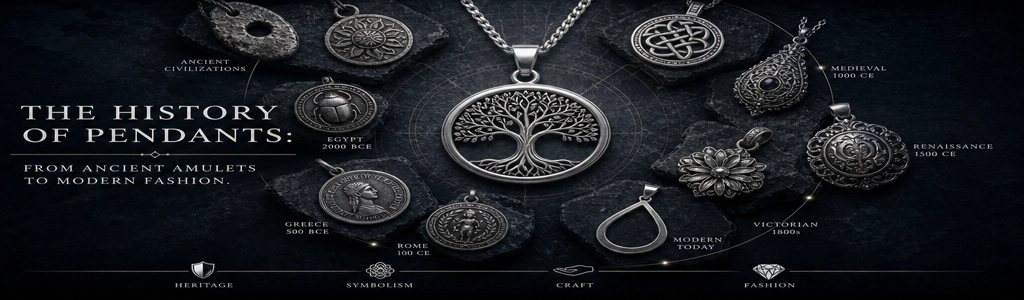
The History of Pendants: From Ancient Amulets to Modern Fashion
Pendants are among the oldest and most enduring forms of jewelry. Suspended from chains, cords, or ribbons, they have carried meaning far beyond decoration. Across cultures and centuries, pendants have served as protective amulets, symbols of devotion, markers of status, and expressions of personal identity. Their evolution tells a fascinating story of human creativity and belief.
🪨 Ancient Origins
- Stone Age beginnings: The earliest pendants were simple objects—animal teeth, shells, and stones—worn around the neck as charms for protection or luck.
- Egyptian craftsmanship: Ancient Egyptians elevated pendants into art, crafting them from gold and precious stones. Scarabs, ankhs, and cartouches symbolized rebirth, life, and divine protection.
- Mesopotamia and Greece: Pendants often depicted gods, mythological creatures, or sacred symbols, reinforcing spiritual and cultural identity.
- India and China: Gemstone pendants carried astrological significance, believed to balance energies and protect wearers.
✝️ Pendants in Religion and Devotion
- Christianity: Cross pendants became widespread symbols of faith, worn close to the heart as reminders of devotion.
- Islamic and Hindu traditions: Pendants inscribed with verses or sacred symbols served as talismans of spiritual protection.
- Reliquary pendants: In medieval Europe, small containers suspended from chains held relics of saints, blending jewelry with sacred ritual.
👑 Pendants as Status and Fashion
- Royal courts: During the Renaissance, pendants adorned with pearls and gemstones were worn by nobility to display wealth and prestige.
- Lockets: By the 17th and 18th centuries, lockets became popular, holding miniature portraits or locks of hair as tokens of love and memory.
- Victorian symbolism: Pendants often carried sentimental motifs—hearts, flowers, or mourning symbols—reflecting the era’s fascination with personal meaning.
- Art Nouveau and Art Deco: Designers in the late 19th and early 20th centuries transformed pendants into bold artistic statements, using flowing lines, enamel, and geometric patterns.
🌍 Cultural Variations
- African traditions: Pendants crafted from beads, ivory, or metal conveyed tribal identity and social status.
- Native American jewelry: Silver and turquoise pendants symbolized harmony with nature and spiritual balance.
- Asian influences: Jade pendants in China symbolized purity and protection, while Navaratna gemstone pendants in India aligned with cosmic forces.
💎 Modern Pendants
- Fashion accessory: Today, pendants range from minimalist silver discs to elaborate gemstone creations, worn for style as much as meaning.
- Identity and personalization: Initial pendants, zodiac signs, and custom engravings allow wearers to express individuality.
- Technology and innovation: Modern pendants incorporate new materials—resins, stainless steel, even smart devices—while maintaining their symbolic roots.
- Timeless appeal: Despite changing fashions, pendants remain intimate ornaments worn close to the heart, blending tradition with contemporary design.
The history of pendants is a journey through human culture. From Stone Age amulets to high-fashion jewelry, pendants have always been more than adornment. They are symbols of belief, identity, and artistry, carrying stories across generations. Whether crafted in silver, gold, or gemstone, pendants continue to embody the timeless desire to wear meaning close to the heart.